
Combi gas boiler – components
Combi gas boiler – components
A standard-output domestic boiler comes with a wall-mounting kit, an expansion vessel and a circulation pump. A thermostat or other controller is never included. The diagram shows all the other components you add to the boiler. Click a number to open the matching product.
A number in the diagram takes you to the matching item in the list below.
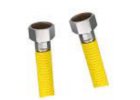
Step 1: gas connection
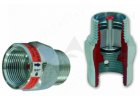
Step 2: boiler and system protection
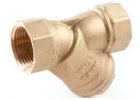
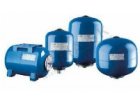
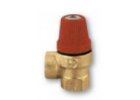
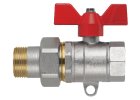
Step 3: pipework, radiators and underfloor circuits
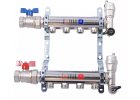
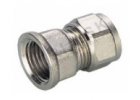
Step 4: temperature control


Step 5: hot water production
Accessories for a combi boiler with instantaneous hot water
This set is for heating engineers and installation companies fitting a combination gas boiler with instantaneous domestic hot water – typically in a flat or a smaller house. You will not find the boiler itself in the ATRIA Europe range; the overview covers the parts installed around a boiler supplied by the customer. The gas connection, the flue and the electrical connection may only be carried out by a person holding a valid qualification under the regulations of the country where the installation takes place.
Installation procedure
- Study the boiler manual – the position and sizes of the connections, the required clearances, the flue type and the manufacturer's requirements for heating water quality.
- When replacing a boiler, flush the existing system thoroughly. Sludge and deposits from old radiators are the most common cause of damage to the heat exchanger and pump of a new boiler.
- Fit ball valves on the heating flow and return so that the boiler can be isolated from the pipework during servicing.
- Install the heating filter in the return before the boiler, in an accessible position, so that you can clean it without dismantling the surrounding parts.
- If the water volume in the system exceeds the capacity of the built-in expansion vessel, connect an additional vessel to the return. There must be no shut-off valve between the boiler and the vessel that could be closed by mistake.
- Route the safety valve outlet through a tundish to the drain, so that any water discharge does not damage the floor or the boiler electronics.
- Fit the cold water supply for hot water production with a shut-off valve and a drinking water filter.
- A qualified technician connects the gas via the ball valve and the safety gas hose, carries out a tightness test and connects the flue – and, with a condensing boiler, the condensate drain as well.
- Finally, connect the room thermostat to the terminals specified by the boiler manufacturer and fit thermostatic heads on the radiator valves.
Choosing the right parts
- Hot water production. A combi boiler heats water only when it is drawn off, so the amount of hot water per minute depends on the boiler output and the temperature of the incoming water. If the household often runs water at several outlets at once, recommend a boiler with a cylinder to your customer instead.
- Expansion vessel. The required volume is calculated from the water volume of the system, the operating temperature and the pressures. As a rough check, the vessel should correspond to approximately one tenth of the water volume in the system. Set the pre-charge pressure according to the height of the building.
- Safety valve. The opening pressure must not exceed the maximum permissible operating pressure of the boiler or of the weakest component in the system – for wall-hung boilers this is usually 3 bar. The valve bore must not be smaller than the connection to which it is fitted.
- Filter. A filter with a magnetic insert also captures fine magnetite particles that an ordinary strainer lets through. Size it to match the pipework so that the filter does not restrict the flow.
- Gas hose. Use only certified safety hoses of a length permitted by local regulations. The hose must not be stretched, twisted or routed through a wall.
- Room thermostat. Check whether the boiler expects a simple switching contact or communicates via a bus such as OpenTherm. A thermostat with an unsuitable interface will either fail to control the boiler or will only switch it on and off without smooth modulation.
Most common installation mistakes
- A new boiler connected to an unflushed system without a filter.
- Filter fitted on the flow instead of the return, or in an inaccessible place.
- Safety valve without a discharge pipe, or with a shut-off valve between the safety valve and the boiler.
- Additional expansion vessel with the pre-charge pressure not set.
- Gas hose routed close to hot parts of the boiler or under mechanical tension.
- Thermostat connected to the wrong terminals or incompatible with the boiler's communication.
Commissioning and maintenance
Fill the system with water of the quality specified by the boiler manufacturer, bleed it thoroughly and set the cold fill pressure according to the manual. We recommend entrusting the first start-up and setting of the boiler to a service engineer authorised by the manufacturer, as the validity of the warranty often depends on it. During the annual inspection, check not only the boiler but also the filter, the expansion vessel pre-charge and the operation of the safety valve.
Frequently asked questions
Why does the boiler not come with a thermostat from the factory?
The boiler controls the temperature of the heating water, not the room temperature. The customer chooses the type of thermostat – wired, wireless or controlled via the internet – according to the layout of the flat and their own comfort requirements.
Is a filter needed in a new system too?
Yes. Even a new system contains installation debris, such as swarf, sand or sealant residues. The filter captures them before they reach the heat exchanger.
Can I reuse the original gas hose when replacing the boiler?
We do not recommend it. A new certified hose is fitted when the boiler is replaced, and the whole connection is decided by the qualified technician, who is responsible for its tightness.
When is an additional expansion vessel needed?
Mainly when underfloor heating, a larger number of radiators or a buffer tank is connected to the boiler. The built-in vessel is designed for a typical flat, and with a larger water volume the pressure would rise excessively during heating.
What to order for the customer's boiler
For the boiler, prepare Gas connection hoses, system protection from the threaded filters and expansion vessels categories, and controls from the Room thermostats and controls range. Registered partners can see wholesale prices after logging in. We dispatch goods from our warehouse in Žilina and ship them throughout the EU.