
Connecting a DHW cylinder to the boiler – diagram
Connecting a DHW cylinder to the boiler – diagram
The cylinder is heated by water from the boiler through a coil; a zone valve switches between space heating and DHW production. The drinking water inlet must have a safety group. Click a number to open the matching product.
A number in the diagram takes you to the matching item in the list below.
Step 1: heat source and cylinder
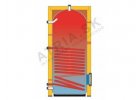


Step 2: cold water and safety devices

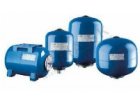
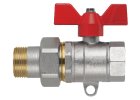
Step 3: DHW distribution to outlets


Heating domestic hot water with a boiler via a cylinder
An indirect cylinder uses heat from the boiler, which it transfers to the drinking water through an internal coil. The set is intended for heating engineers adding hot water production with full safety equipment, secondary circulation and anti-scald protection to a boiler – whether gas, electric or solid fuel. The overview covers both the heating side and the water side, because it is precisely at the interface between them that most mistakes occur.
Installation procedure
- Stand or hang the cylinder according to its type, and leave access to the inspection opening, the anode and the immersion pocket.
- On the heating side, run the flow from the boiler to the upper coil connection and the return from the lower one. Install the zone valve in the branch to the cylinder as specified in the heat source diagram.
- Push the cylinder thermostat into the immersion pocket. The electrician wires it so that, when the temperature drops, it opens the zone valve and at the same time sends a heat demand to the boiler.
- On the cold water supply, follow this order: shut-off valve, filter, pressure reducing valve if needed, safety group and potable water expansion vessel, and only then the cylinder inlet. Route the safety valve discharge through a tundish to the drain.
- Fit a shut-off valve and a thermostatic mixing valve on the hot water outlet; feed cold water to its side inlet.
- Run the secondary return pipe from the most distant outlet back to the circulation connection of the cylinder. Fit a pump for drinking water with a non-return valve in it, and insulate the entire pipe.
- Fill the drinking water side first and expel the air from it through the outlets; the heating coil comes next.
Choosing the right parts
- The zone valve should be sized according to the pipework and the flow rate to the cylinder. Check the actuator voltage and whether it has an auxiliary contact for switching the boiler or pump.
- The cylinder thermostat must have a suitable setting range and a sensor that fits into the cylinder pocket.
- The safety group is chosen according to the size of the cylinder inlet. The opening pressure of the safety valve must not exceed the maximum permissible pressure of the cylinder.
- The potable water expansion vessel is sized according to the cylinder volume, the mains pressure and the maximum water temperature. Set the pre-charge to the pressure downstream of the pressure reducing valve.
- The thermostatic mixing valve should be chosen according to its setting range and the flow rate drawn by outlets that are open at the same time.
- The secondary circulation pump must have a body made of a material suitable for drinking water. A small output is enough; a timer or thermostat significantly reduces heat losses.
Most common installation mistakes
- A shut-off valve between the safety group and the cylinder.
- A vessel approved only for heating systems fitted on the drinking water.
- Secondary circulation without a non-return valve or without insulation – the water flows in the wrong direction and heat losses increase.
- A mixing valve without a cold water supply or with its inlets swapped.
- A zone valve that is not electrically linked to the boiler, so the boiler does not respond to the cylinder's demand.
- A thermostat sensor lying outside the immersion pocket.
Commissioning and maintenance
After filling, bleed the cylinder by opening the hot water outlets, test the operation of the safety valve and check for leaks. Set the cylinder thermostat and the mixing valve to the required outlet temperature. For hygiene reasons, heat the cylinder above 60 °C regularly. During maintenance, check the anode, desludge the cylinder, clean the filter and check the expansion vessel pre-charge.
Frequently asked questions
Why a mixing valve when I can lower the cylinder temperature?
A higher cylinder temperature is better from a hygiene point of view and increases the usable store of hot water. The mixing valve meanwhile protects users from scalding at the outlet.
Does secondary circulation have to run continuously?
No. It is enough to run it at times when hot water is actually being used, for example in the morning and evening. You save energy for the pump as well as on heat losses in the pipework.
Where does the potable water expansion vessel go?
Between the safety group and the cylinder, i.e. on the cold water supply downstream of the non-return valve. In any other position, it would not take up the expansion of the water during heating.
Can the cylinder also be heated electrically?
If the cylinder design allows it, an electric immersion heater can be added. When buying, check whether the cylinder has a boss prepared for one.
What to order for the cylinder
You will find the right type and capacity in the buffer tanks and water heaters category; switching is handled by the Zone valve 230V DN25 together with the ADEX TTUV electric thermostat, and safety by the Safety group - for DHW cylinders - 3/4". Registered partners can see wholesale prices after logging in. We dispatch goods from our warehouse in Žilina and ship them throughout the EU.