
Gas boiler and separate cylinder – components
Gas boiler and separate cylinder – components
A standard-output domestic boiler comes with a wall-mounting kit, an expansion vessel and a circulation pump. The DHW cylinder and the controls are ordered as separate items. The diagram shows all the other components you add to the boiler. Click a number to open the matching product.
A number in the diagram takes you to the matching item in the list below.
Step 1: gas connection
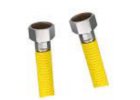
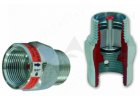
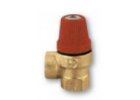
Step 2: boiler and system protection
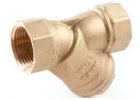
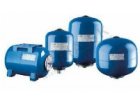
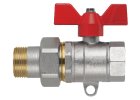
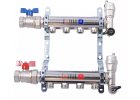
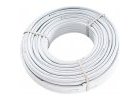
Step 3: pipework, radiators and underfloor circuits
Step 4: temperature control


Step 5: hot water production
Accessories for a boiler with a separate cylinder
A combination of a gas boiler and an indirect cylinder is suitable where more hot water is used – in larger households, with two bathrooms or with a bath. The set helps heating engineers and installation companies prepare materials for the heating side, for the connection to the cylinder and for the drinking water pipework. The boiler is not part of the ATRIA Europe range; the gas, flue and electrical connections are strictly the job of a qualified person.
Installation procedure
- Find out how the boiler controls water heating: whether it has a built-in diverter valve with an outlet for the cylinder, or whether switching between heating and hot water will be handled by an external zone valve.
- Position the cylinder as close to the boiler as possible. A short connection reduces heat losses as well as the time needed for heating.
- Connect the cylinder coil so that the heating water enters through the upper connection and leaves through the lower one. This counterflow connection makes the best use of the coil.
- Push the cylinder sensor or thermostat all the way into the immersion pocket so that it measures the actual water temperature.
- On the cold water supply, fit a shut-off valve, a filter, a pressure reducing valve if needed, and the mandatory safety group with a safety valve and a non-return valve. There must be no shut-off valve between the safety valve and the cylinder.
- On the drinking water side, add an expansion vessel designed for potable water – it takes up the expansion of the water during heating and limits dripping from the safety valve.
- Equip the heating side of the boiler with ball valves, a filter on the return, an expansion vessel sized for the system volume and a safety valve with a discharge.
- A qualified technician connects the gas, the flue and the electrical supply and checks the tightness of the connection.
- Connect the room thermostat, link the cylinder sensor to the boiler and fit thermostatic heads on the radiators.
Choosing the right parts
- The cylinder capacity should be chosen according to the number of occupants and the draw-off pattern – a household with a bath needs a larger store than one that only uses showers. A small cylinder with a powerful boiler reheats quickly, but it may not be enough for a single large draw-off.
- The cylinder coil must be able to absorb the boiler output. A coil surface that is too small prolongs heating, and the boiler cycles unnecessarily often.
- The drinking water safety valve should be chosen according to the maximum permissible cylinder pressure stated by the manufacturer. The heating safety valve is chosen separately, according to the boiler pressure.
- The potable water expansion vessel must be approved for this purpose. A heating vessel is not suitable – neither its membrane nor its inner surface is designed for contact with drinking water.
- Taps receive water at a higher and more stable temperature with cylinder heating. Thermostatic mixers in showers increase both safety and comfort.
Most common installation mistakes
- A shut-off valve fitted between the cylinder and the safety valve.
- Coil connected the wrong way round, so the cylinder heats up slowly and unevenly.
- Cylinder sensor loose in the pocket, not touching its bottom.
- A heating expansion vessel used for drinking water.
- Safety valve discharge without a visible tundish – a continuous water leak then goes unnoticed.
Commissioning and maintenance
Fill the cylinder and bleed it through the highest hot water outlet before the first heat-up. Then fill and bleed the heating system and have the boiler commissioned by an authorised service engineer. Regularly ease the cylinder safety valve using its test knob so that the seat does not become clogged. Occasionally heat the cylinder to a higher temperature than usual – this limits the growth of bacteria in water that stands for longer periods.
Frequently asked questions
Is a zone valve needed if the boiler has its own diverter valve?
No. A zone valve is needed for boilers that do not handle the switching themselves, or when the cylinder is connected to existing pipework.
Why does the cylinder safety valve drip occasionally?
Water expands when heated. Without a potable water expansion vessel, the excess escapes through the safety valve. Dripping during heating is therefore normal, but a continuous leak indicates a fault or excessively high mains pressure.
Can the cylinder also be connected to a boiler the customer already has?
In most cases, yes – if the boiler supports cylinder heating or if an external zone valve with a cylinder thermostat is added. The boiler manual and output are decisive.
What temperature is suitable in the cylinder?
The usual setting is a temperature at which the water is sufficiently hot without unnecessarily increasing heat losses. For hygiene reasons, it is recommended to heat the cylinder above 60 °C regularly.
What to order for the customer's boiler
Choose the cylinder in the buffer tanks and water heaters category, system protection from the expansion vessels and safety valves ranges, and complete the outlet side with Taps and mixers. Registered partners can see wholesale prices after logging in. We dispatch goods from our warehouse in Žilina and ship them throughout the EU.