
Wood-fired boiler – components
Wood-fired boiler – components
A boiler for wood or other solid fuel requires a separate boiler circuit with a mixing valve and a circulation pump, controls and system safety components. The diagram shows all the other components you add to the boiler. Click a number to open the matching product.
A number in the diagram takes you to the matching item in the list below.
Step 1: heat source and primary circuit
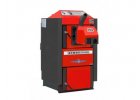


Step 2: boiler and circuit control

Step 3: hot water production

Step 4: system protection
Step 5: pipework and manifolds
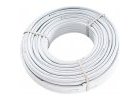
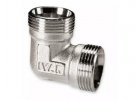
A wood-fired boiler and its boiler circuit
A boiler for wood or other solid fuel places higher demands on the installation than a gas or electric heat source: it needs protection against a low return temperature, reliable heat dissipation even during a power cut, and carefully designed safety equipment. The set is intended for installation companies and heating engineers building or upgrading a solid fuel boiler room. The connection to the chimney may only be assessed and carried out by a qualified person.
Installation procedure
- Position the boiler according to the manufacturer's instructions, observing the clearances from combustible materials and leaving access for cleaning. The flue pipe is connected and the chimney assessed by a qualified person.
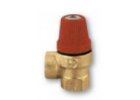
- Fit the safety equipment on the boiler outlet – a safety valve, a thermometer and a pressure gauge – with no shut-off valve of any kind between the boiler and the safety valve.
- If the manufacturer requires a cooling loop, connect a thermal discharge valve with a cold water supply to the boiler; it removes the excess heat if the boiler overheats.
- Assemble the boiler circuit with a four-way mixing valve. The valve blends hot water into the return, so the boiler works with a sufficiently high return water temperature and less tar and condensate form in the combustion chamber.
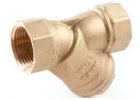
- Install the circulation pump according to the boiler manufacturer's diagram, most often in the return. A filter belongs before the pump, with shut-off valves on both sides.
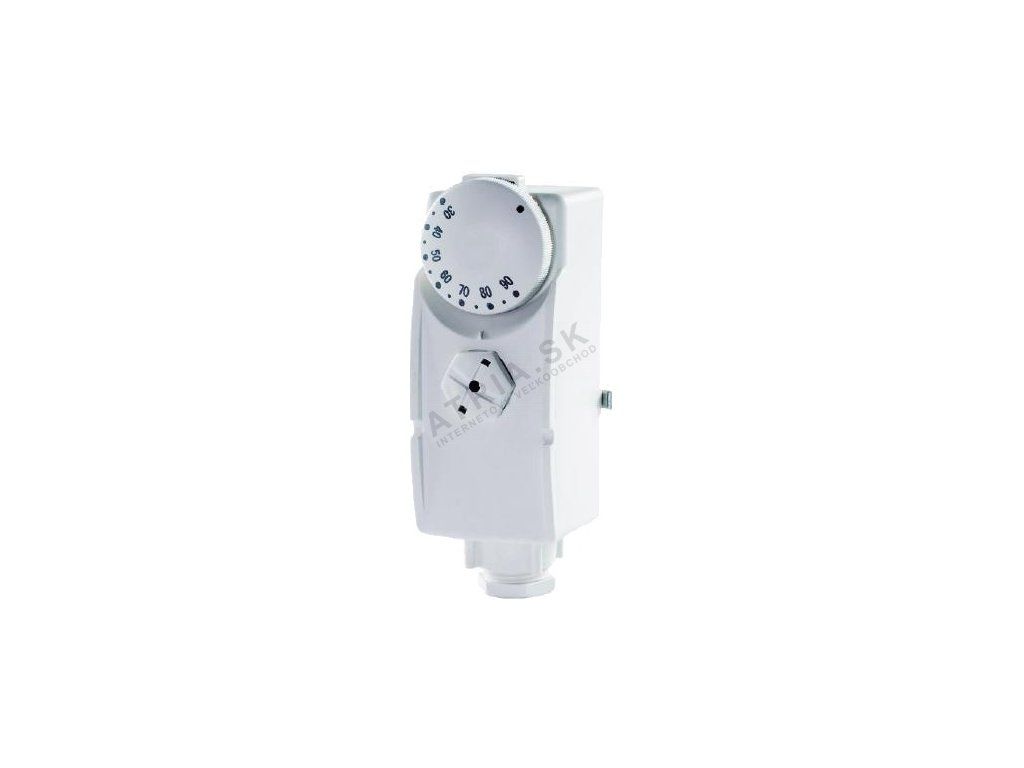
- Attach a pipe thermostat to the boiler flow pipe; it switches the pump on only once the boiler has warmed up and switches it off when the fire has gone out.
- If the boiler will also heat water, connect the cylinder via a zone valve and a cylinder thermostat. The thermostat determines when the heat is diverted to the cylinder.
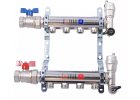
- Make the pipework to the radiators or manifolds from pipe with sufficient temperature resistance, because the water from a solid fuel boiler can reach higher temperatures than with other heat sources.
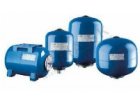
- Connect an expansion vessel sized for the entire system volume, including any buffer tank.
Choosing the right parts
- The mixing valve is chosen according to the flow through the boiler circuit and the permissible pressure loss across the valve. An undersized valve will not allow the full boiler output to be transferred; an oversized one impairs control accuracy.
- The pump should be sized according to the boiler output and the temperature difference. The flow in m³/h is roughly calculated as the output in kW divided by the product of 1.163 and the difference between the flow and return temperatures in kelvin.
- A buffer tank is highly recommended with wood gasification boilers – the boiler burns at full output with the best efficiency and the surplus heat is stored for later. Determine the volume according to the boiler output and the manufacturer's instructions.
- The expansion vessel for solid fuel is sized with a reserve, because the system can briefly reach higher temperatures. With a large buffer volume, the vessel is usually considerably larger than with a gas boiler.
- The controls of the boiler room can be simple, with a pipe thermostat for the pump, or comprehensive, controlling the mixed circuit and cylinder heating. With several circuits, a central controller is worthwhile.
Most common installation mistakes
- A boiler without return protection – tar condenses in the combustion chamber and the boiler corrodes faster.
- A shut-off valve between the boiler and the safety valve or the expansion vessel.
- A missing cooling loop, even though the manufacturer specifies it for a sealed system.
- No provision for a power cut – the pump stops and the heat from the burning boiler has nowhere to go.
- A pipe thermostat placed far from the boiler or without good contact with the pipe.
- An undersized expansion vessel after a buffer tank has been connected.
Commissioning and maintenance
Before the first firing, flush, fill and bleed the system and check it for leaks at operating pressure. Carry out the first firing with a smaller amount of fuel and monitor the operation of the mixing valve, the pump and the thermostat. During the season, clean the boiler and the flue pipe regularly, check the filter and, once a year, verify that the safety valve and the cooling device work properly.
Frequently asked questions
Why is a four-way mixing valve needed?
It keeps the return temperature to the boiler above the threshold at which moisture and tar would condense inside the boiler. It also allows smooth control of the temperature of the water going to the radiators.
Does a wood-fired boiler have to have a buffer tank?
For wood gasification boilers, most manufacturers recommend or directly require one. For conventional boilers it is not always mandatory, but it significantly increases comfort and reduces the number of firings.
What happens during a power cut?
The pump stops circulating the water and the temperature in the boiler rises quickly. That is why a backup power supply for the pump and safety equipment that works even without electricity are recommended for solid fuel boilers.
What is the zone valve for?
It switches the heat from the boiler between space heating and cylinder heating. It is controlled by the cylinder thermostat, so the water is heated only when needed.
What to order for the boiler room
Choose the boiler in the ATMOS solid fuel boilers category; complete the boiler circuit with the Mixing valve - four-way, 1"; Kv 8; 5 Nm, Pumps for heating and water and the AVANSA TH 2A pipe thermostat. Registered partners can see wholesale prices after logging in. We dispatch goods from our warehouse in Žilina and ship them throughout the EU.